Videoproductie Tipspublished on 2026-04-15T18:16:20+08:00
5 prompttechnieken die AI-video's er professioneel uit laten zien
5 Prompt Techniques That Make AI Videos Look Professional
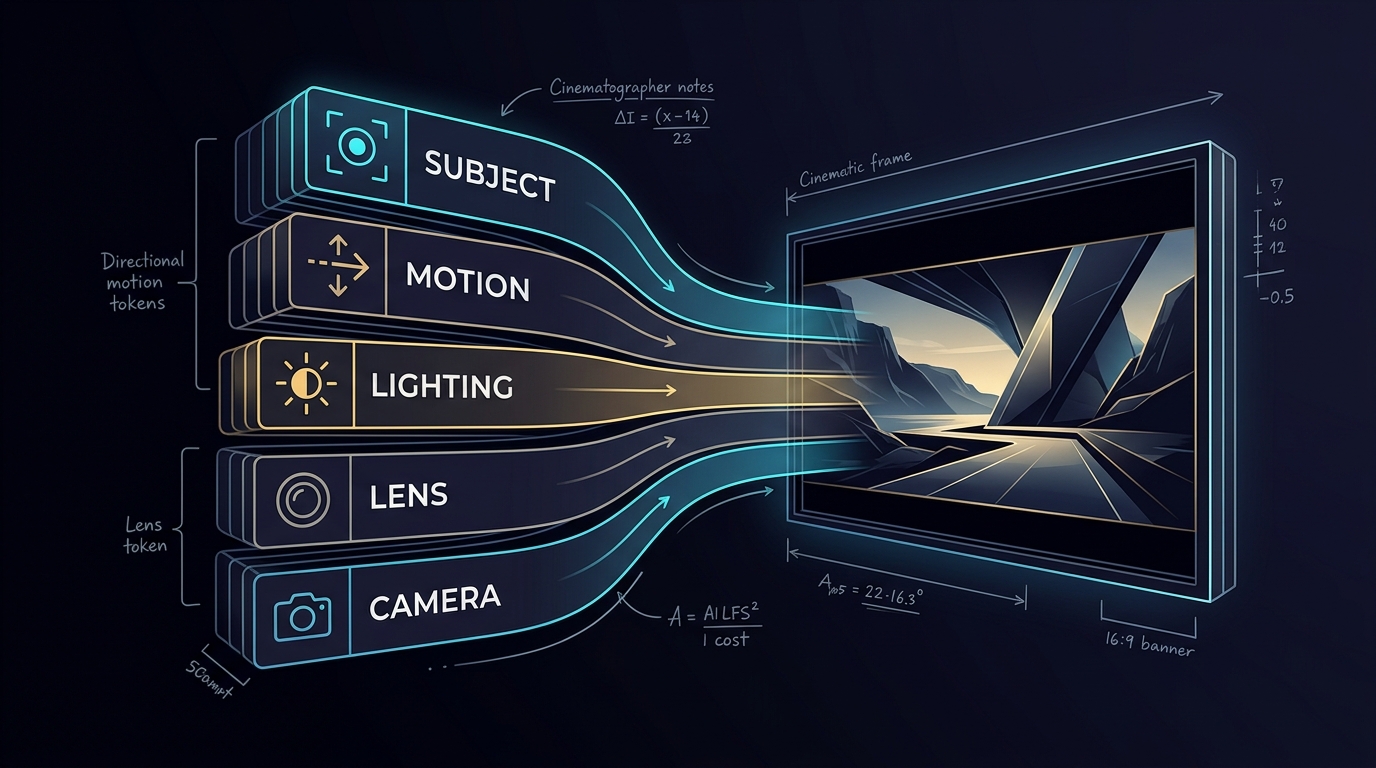
The gap between amateur-looking AI clips and professional-grade output often comes down to how you write your prompts. These five techniques, drawn from cinematography and production workflows, consistently produce better results across all major video models.
Technique 1: Cinematic Language Mapping
AI video models respond strongly to established film terminology. Instead of describing what you want in everyday language, use the vocabulary that cinematographers use.
Before vs After
- Before: "A woman walking on a beach from far away"
- After: "Wide establishing shot, woman walking along shoreline, golden hour backlighting, 85mm equivalent focal length, anamorphic lens flare, Arri Alexa color science"
Key Terms That Work
- Focal length: 24mm (wide), 50mm (natural), 85mm (portrait), 135mm (compressed)
- Camera movement: Dolly in, crane up, steadicam follow, whip pan
- Lighting: Rembrandt, butterfly, split, rim light, practical lights
- Film stock: Kodak Vision3 500T, Fuji Eterna, IMAX 65mm
Technique 2: Style Anchoring
Create a consistent "style block" that you prepend to every prompt in a sequence. This maintains visual coherence across multiple shots.
Example Style Anchor
"Cinematic 2.39:1 aspect ratio, desaturated teal and orange color grading, shallow depth of field, film grain texture, 24fps motion cadence, soft diffused lighting"
This block stays identical. Only the subject, action, and camera change between shots. The result: every clip in your sequence looks like it belongs to the same film.
Technique 3: Motion Direction Control
The most common complaint about AI video is "it does not move the way I want." You can control this by being explicit about motion vectors:
- Subject motion: "walks left to right", "rises from sitting to standing", "turns 90 degrees to face camera"
- Camera motion: "slow push in", "orbit clockwise", "static locked-off tripod"
- Environment motion: "leaves falling gently", "clouds time-lapsing overhead", "waves crashing in background"
Separate subject, camera, and environment motion in your prompt for clearest results.
Technique 4: Negative Space Description
Tell the model what you do NOT want. Many models support negative prompts, and even those that do not respond to explicit exclusions in the main prompt:
- "No text overlays, no watermarks"
- "Avoid sudden camera shakes or jittery motion"
- "No extreme close-ups, maintain medium framing"
- "Avoid oversaturation, keep colors natural"
Technique 5: Reference Stacking
Combine multiple real-world references to create a specific look:
"The color palette of Blade Runner 2049, the camera movement style of Emmanuel Lubezki, the pacing of a Terrence Malick film, shot on 35mm Kodak film stock"
This gives the model multiple anchors to triangulate a specific visual identity. Use 2-3 references maximum — more than that and the model struggles to reconcile conflicting styles.
Putting It All Together
Here is a prompt using all five techniques:
"[Style anchor] Cinematic 2.39:1, desaturated teal-orange grade, 35mm film grain, soft natural lighting. [Scene] Medium shot, young architect studying blueprints at a drafting table, warm desk lamp as key light, camera slowly dollies in from 50mm to 85mm equivalent. Subject lifts head and looks toward window, light catches her face. No text, no jitter, no oversaturated colors. Inspired by the interior scenes in The Grand Budapest Hotel."
This prompt is specific, structured, and gives the model clear direction on every axis: subject, action, camera, lighting, style, and exclusions.
Related reading
Delen
Related Posts
Videoproductie Tips
Discover five advanced prompt writing techniques that dramatically improve the quality and consistency of your AI-generated videos.
2026-04-15T18:16:20+08:00
Videoproductie Tips
Learn efficient batch workflows for producing multiple AI videos in a single session. Ideal for ad testing, social content calendars, and short drama episodes.
2026-04-15T18:16:20+08:00